Introduction
Commercial buildings accommodate large numbers of employees, customers, visitors, and valuable assets every day. Offices, shopping centers, hotels, hospitals, warehouses, factories, and educational institutions all depend on reliable fire protection systems to maintain a safe environment. Installing a fire protection system is only the first step. To ensure the system continues to perform effectively throughout its lifespan, regular Bảo trì hệ thống PCCC is essential.
Bảo trì hệ thống PCCC refers to the routine inspection, testing, servicing, and repair of fire protection equipment. These maintenance activities help identify potential issues before they become serious problems, ensuring that fire alarms, sprinklers, extinguishers, emergency lighting, smoke detectors, and other safety systems function properly during an emergency.
A well-maintained fire protection system not only safeguards lives but also protects business operations, reduces financial losses, and supports compliance with fire safety regulations. This guide explains the importance of Bảo trì hệ thống PCCC for commercial buildings, the components involved, maintenance procedures, common challenges, and best practices for long-term reliability.
Understanding Fire Protection Systems in Commercial Buildings
Commercial fire protection systems consist of several interconnected components that work together to detect, alert, control, and suppress fires. Every component has a specific purpose, and all must operate correctly during an emergency.
Typical fire protection systems include:
- Fire alarm systems
- Smoke detectors
- Heat detectors
- Automatic sprinkler systems
- Fire pumps
- Fire hydrants
- Fire extinguishers
- Emergency lighting
- Exit signs
- Smoke control systems
- Emergency communication equipment
Each system requires periodic maintenance to remain reliable.
Why Bảo trì hệ thống PCCC Is Necessary
Fire protection equipment operates continuously, even when there are no emergencies. Over time, environmental conditions, aging components, and daily building activities can affect performance.
Common causes of equipment deterioration include:
- Dust accumulation
- Moisture exposure
- Corrosion
- Electrical wear
- Mechanical damage
- Temperature changes
- Power fluctuations
- Vibration
Without routine maintenance, these issues may remain unnoticed until an actual fire occurs.
Bảo trì hệ thống PCCC ensures every component is inspected regularly so problems can be corrected before they compromise safety.
Benefits of Regular Maintenance
Routine maintenance offers numerous advantages for commercial property owners and facility managers.
Improved Safety
Properly maintained systems respond quickly during emergencies, providing early warnings and effective fire suppression that help save lives.
Reduced Equipment Failures
Regular inspections identify worn or damaged components before complete failure occurs, reducing unexpected breakdowns.
Lower Repair Costs
Preventive maintenance addresses minor issues early, avoiding expensive emergency repairs or complete equipment replacement.
Longer Equipment Lifespan
Cleaning, calibration, lubrication, and timely replacement of worn parts help fire protection equipment last significantly longer.
Better Business Continuity
Reliable fire protection minimizes downtime after incidents, allowing businesses to resume operations more quickly.
Regulatory Compliance
Many commercial buildings are legally required to maintain fire protection systems according to established inspection schedules.
Fire Alarm System Maintenance
The fire alarm system serves as the primary warning mechanism during a fire emergency.
Maintenance procedures typically include:
- Testing alarm panels
- Inspecting control circuits
- Verifying communication signals
- Testing manual call points
- Checking sirens and warning devices
- Inspecting backup batteries
- Confirming software operation Bảo trì hệ thống PCCC
Technicians also verify that every detector communicates correctly with the control panel.
Smoke Detector Maintenance
Smoke detectors play a crucial role in early fire detection.
Routine maintenance includes:
- Cleaning sensor chambers
- Functional testing
- Sensitivity testing
- Battery inspection
- Replacing damaged detectors
- Checking mounting locations
Dust and dirt can reduce detector sensitivity, making regular cleaning essential.
Heat Detector Inspection
Heat detectors are commonly installed in kitchens, boiler rooms, warehouses, and industrial facilities where smoke detectors may generate false alarms.
Maintenance includes:
- Temperature response testing
- Physical inspection
- Cleaning
- Wiring verification
- Functional testing
Proper operation ensures reliable fire detection in specialized environments.
Sprinkler System Maintenance
Automatic sprinkler systems are among the most effective methods of controlling fires.
Routine sprinkler maintenance involves inspecting:
- Sprinkler heads
- Water supply
- Pipes
- Valves
- Pressure gauges
- Drain systems
- Water tanks
Technicians also check for corrosion, leaks, blocked sprinkler heads, and accidental damage.
Ensuring unobstructed sprinkler heads is particularly important because storage materials or decorative items may interfere with water distribution.
Fire Pump Maintenance
Fire pumps provide adequate water pressure throughout the sprinkler and hydrant systems.
Maintenance tasks include:
- Operational testing
- Pressure testing
- Lubrication
- Electrical inspections
- Fuel level checks for diesel pumps
- Motor inspections
- Vibration monitoring
Regular testing confirms that pumps activate automatically when required.
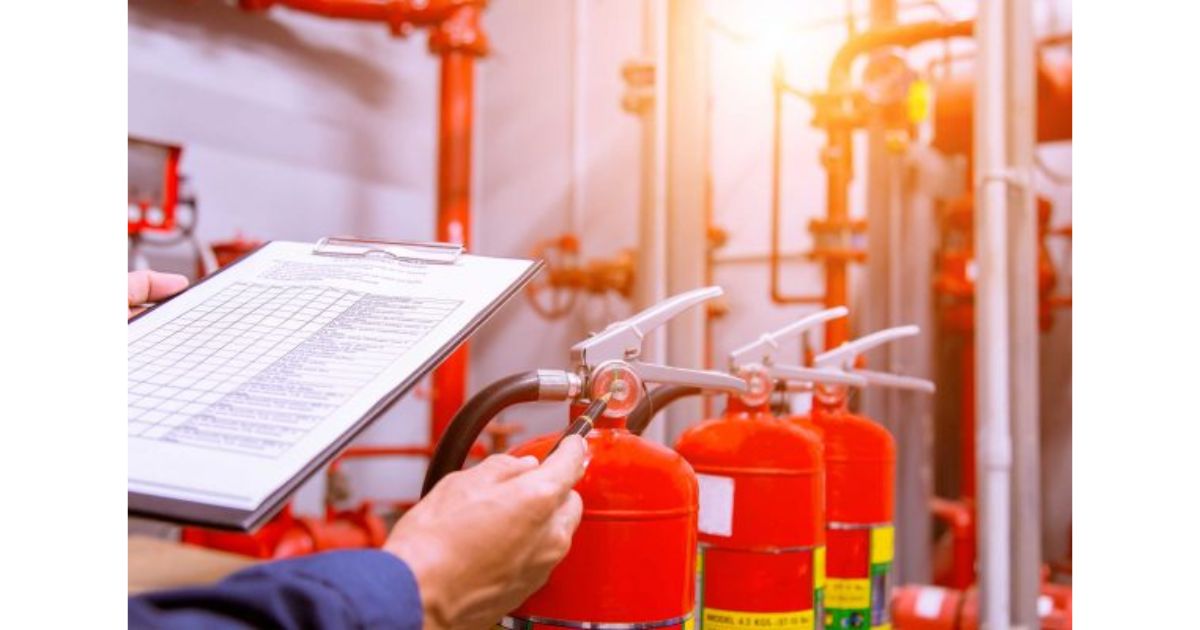
Fire Extinguisher Servicing
Portable fire extinguishers provide immediate response to small fires before they spread.
Maintenance includes:
- Pressure gauge inspection
- Seal verification
- Physical examination
- Hose inspection
- Weight verification
- Recharging when necessary
- Replacing expired units
Proper placement and accessibility should also be confirmed during inspections.
Emergency Lighting Maintenance
Power failures often accompany fire emergencies.
Emergency lighting helps occupants evacuate safely by illuminating escape routes.
Routine maintenance includes:
- Battery testing
- Light output verification
- Charging system inspection
- Fixture cleaning
- Replacement of damaged units
Every emergency light should remain operational for the required duration during power outages.
Exit Sign Inspection
Clearly visible exit signs guide occupants toward safe exits during emergencies.
Maintenance activities include:
- Checking illumination
- Testing backup batteries
- Cleaning sign surfaces
- Confirming visibility
- Replacing damaged signs
Exit signs should remain visible from all designated evacuation routes.
Fire Hydrant Maintenance
Commercial buildings frequently rely on internal or external fire hydrants.
Routine inspections include:
- Valve operation
- Water pressure testing
- Leak detection
- Hose connection inspection
- Accessibility verification
Hydrants blocked by landscaping, vehicles, or storage materials should be cleared immediately.
Documentation and Record Keeping
An important part of Bảo trì hệ thống PCCC is maintaining detailed service records.
Maintenance documentation typically includes:
- Inspection dates
- Test results
- Repairs completed
- Equipment replacements
- Technician observations
- Future maintenance recommendations
Accurate records help demonstrate compliance and simplify future inspections.
Common Maintenance Challenges
Commercial buildings often face several maintenance obstacles.
Aging Equipment
Older systems may require more frequent servicing and replacement parts that are increasingly difficult to obtain.
Busy Business Operations
Maintenance must often be scheduled outside normal business hours to avoid disrupting operations.
Large Building Size
Extensive facilities require careful planning to ensure every device receives proper inspection.
Environmental Conditions
Industrial facilities may expose equipment to dust, chemicals, vibration, or extreme temperatures that accelerate wear.
Budget Constraints
Some organizations delay maintenance to reduce costs, increasing the likelihood of expensive failures later.
Best Practices for Effective Maintenance
Organizations can improve maintenance quality by following several best practices.
Develop a Maintenance Schedule
Routine inspections should follow a structured calendar with daily, monthly, quarterly, and annual activities.
Hire Qualified Professionals
Experienced technicians possess the training and equipment necessary for comprehensive fire system inspections.
Perform Preventive Maintenance
Address small issues immediately before they become larger and more expensive problems.
Train Employees
Staff members should know how to identify obvious damage and report potential problems quickly.
Replace Aging Components
Older equipment should be upgraded before reliability declines significantly.
Conduct Regular Testing
Functional testing confirms that systems operate correctly under simulated emergency conditions.
Integrating Maintenance with Overall Safety Planning
Fire protection maintenance works best as part of a comprehensive safety program.
Organizations should combine Bảo trì hệ thống PCCC with:
- Fire drills
- Emergency response planning
- Employee safety training
- Risk assessments
- Building inspections
- Evacuation planning
Together, these measures strengthen overall preparedness.
Future Trends in Fire System Maintenance
Modern technology is transforming fire protection maintenance.
New developments include:
- Smart fire detection systems
- Remote monitoring
- Internet-connected sensors
- Predictive maintenance software
- Digital inspection reports
- Automated diagnostics
- Artificial intelligence monitoring
These innovations help maintenance teams detect problems earlier while improving inspection efficiency.
Conclusion
Bảo trì hệ thống PCCC is a critical responsibility for every commercial building owner and facility manager. Regular inspection, testing, servicing, and repair ensure that fire protection systems remain fully operational throughout their service life. Proper maintenance protects lives, preserves valuable assets, reduces repair costs, supports regulatory compliance, and minimizes business interruptions.
Commercial buildings are dynamic environments where equipment experiences continuous wear and changing conditions. Without ongoing maintenance, even the most advanced fire protection systems can become unreliable. By implementing a comprehensive Bảo trì hệ thống PCCC program, organizations create a safer workplace, enhance emergency preparedness, and ensure their fire protection systems are always ready to perform when they are needed most.